
Architectural Lighting: The Intersection of Art, Science, and Human Experience
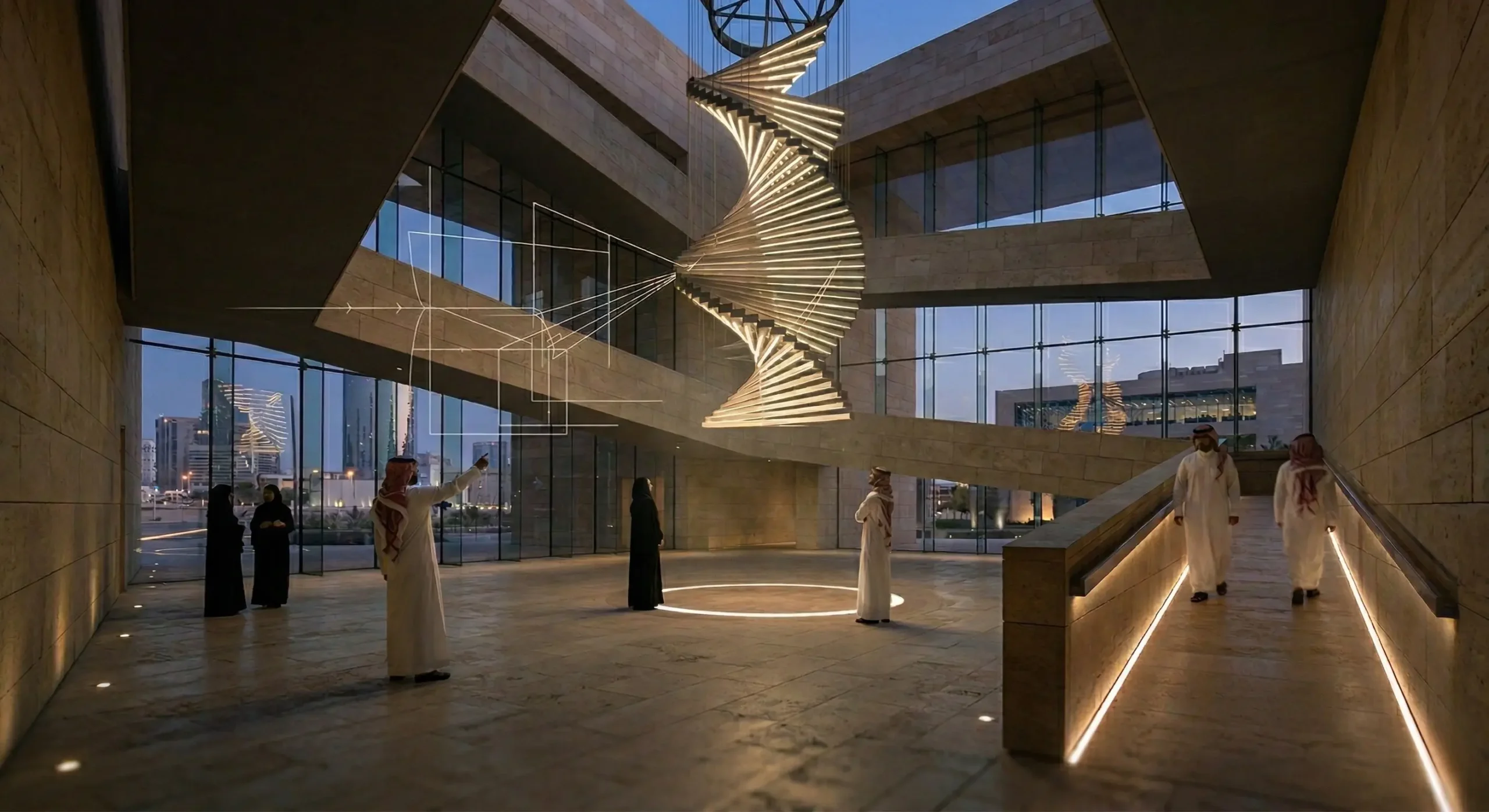
In the rapidly evolving skyline of Saudi Arabia, buildings are no longer just static structures of concrete and glass; they have become living canvases that tell a story long after the sun sets. At DTS, we believe that Architectural Lighting is the invisible thread that weaves together form and function, transforming a physical space into an emotional journey. As the Kingdom moves toward the ambitious goals of Vision 2030, the demand for sophisticated lighting design has shifted from mere illumination to a complex discipline that balances aesthetic brilliance with technical precision.
The Evolution of Architectural Lighting Design
The philosophy behind modern architectural lighting design has undergone a radical transformation, moving away from “flooding” a building with light toward a more nuanced, “layered” approach. This evolution focuses on revealing the soul of the architecture by playing with shadows as much as with light, creating depth and character that static lighting simply cannot achieve. In a world where first impressions are often digital or fleeting, a well-lit façade serves as a silent ambassador for a brand, communicating luxury, innovation, or heritage without a single word.
By treating light as a primary building material, designers can manipulate the perceived proportions of a room, guide the movement of people, and even influence the mood of a city. This strategic application of light is not just about visibility; it is about creating an atmosphere that resonates with the human spirit. According to the International Association of Lighting Designers (IALD), professional lighting design adds measurable value to a project by enhancing the occupant experience and increasing the asset’s marketability.
Human-Centric Lighting: Designing for the Biological Clock
One of the most significant breakthroughs in the industry is the rise of human-centric lighting (HCL), a concept that places the biological needs of the user at the center of the design process. Since humans spend nearly 90% of their time indoors, our exposure to artificial light significantly impacts our circadian rhythms—the internal clock that regulates sleep, mood, and cognitive performance. At DTS, we implement HCL by utilizing tunable white technology that mimics the natural progression of daylight, shifting from cool, energizing tones in the morning to warm, relaxing hues in the evening.
The science behind this approach is robust, with studies from organizations like the WELL Building Institute showing that light quality directly correlates with productivity and mental well-being. In the context of Saudi Arabia’s high-pressure corporate environments and luxury residential projects, HCL is no longer a luxury but a health necessity. By aligning artificial environments with our evolutionary biology, we create spaces that don’t just look good—they make people feel good, fostering a sense of harmony between the built environment and the natural world.
Façade Lighting Design: Creating Urban Landmarks
When we discuss the “identity” of a city like Riyadh or Jeddah, the conversation inevitably turns to the nightscape. Façade lighting design is the tool that allows architects to reclaim the night, turning skyscrapers and heritage sites into beacons of light. However, the challenge lies in achieving aesthetic illumination without contributing to light pollution or energy waste. Modern techniques involve grazing walls to highlight textures, silhouetting forms to create drama, and using integrated media systems to allow buildings to communicate with the public during national celebrations.
A successful façade project requires a deep understanding of materials; how light reflects off polished marble is vastly different from how it is absorbed by traditional mud-brick structures in Diriyah. By using precision optics and narrow-beam angles, we can ensure that light stays exactly where it is intended, preventing “sky glow” and preserving the darkness of the desert sky. This meticulous attention to detail ensures that the building stands out for its elegance and sophistication, rather than just its brightness, aligning with global standards for sustainable outdoor lighting.
Sustainable Lighting Solutions and the Green Mandate
In an era defined by climate consciousness, sustainable lighting solutions have moved from the periphery to the heart of architectural discourse. Sustainability in lighting is a multi-dimensional challenge that involves selecting high-efficacy LEDs, utilizing recyclable materials, and implementing smart controls to minimize waste. For developers in the Kingdom, adhering to the Saudi Green Initiative means that energy efficiency is now a regulatory requirement as much as an ethical one, pushing the industry toward radical innovation.
At DTS, we don’t just look at the wattage of a bulb; we analyze the entire lifecycle of the lighting system. By reducing the “Light Power Density” (LPD) through smarter design rather than just dimmer bulbs, we help our clients achieve prestigious certifications like LEED or Mostadam. Sustainable design is about doing more with less—using the right amount of light, in the right place, at the right time—ensuring that our architectural legacy does not come at the cost of our planetary future.
The Technical Backbone: Integrated Lighting Systems and Control
Building upon the conceptual foundations, we must address the sophisticated engineering that brings a vision to life. The modern architectural landscape demands more than standalone fixtures; it requires integrated lighting systems that disappear into the building’s anatomy while performing with surgical precision. This integration ensures that the light source remains secondary to the effect it produces, allowing the textures of stone, wood, and metal to speak for themselves. By embedding light within the very fabric of the architecture, we transition from merely illuminating a room to creating a cohesive, luminous environment that feels organic and purposeful.
The true intelligence of these systems resides in the advancement of lighting control technology, which acts as the nervous system of a modern building. Gone are the days of simple on-off switches; today’s high-end projects in Saudi Arabia utilize DALI, KNX, or wireless protocols to manage thousands of data points simultaneously. These controls allow for automated scene-setting, where the intensity and color of light adjust autonomously based on occupancy or the amount of natural daylight entering through the glass. This level of automation is essential for maintaining visual comfort, as it prevents the harsh transitions that often lead to eye strain and headaches in static environments.
Professional lighting consultancy services play a critical role in this phase, serving as the bridge between the architect’s dream and the engineer’s reality. At DTS, our consultants utilize advanced software to perform photometric calculations, ensuring that every corner of a space meets international standards for safety and productivity. We analyze the “Unified Glare Rating” (UGR) to ensure that light never becomes a source of discomfort, particularly in corporate offices where screen reflections can be a major deterrent to employee efficiency. By navigating the complexities of beam angles, color rendering indices, and thermal management, a consultant ensures that the investment in lighting translates into a tangible increase in property value.
The intersection of energy-efficient lighting and smart technology has created a new paradigm for operational cost management in large-scale developments. In the heat of the Saudi summer, reducing the heat gain from lighting fixtures is just as important as reducing their electricity consumption, as it directly lowers the load on HVAC systems. By integrating sensors that detect when a space is unoccupied, we can eliminate the “vampire” energy waste common in traditional commercial buildings. This holistic approach to efficiency is a cornerstone of modern sustainable engineering, proving that high-end aesthetics do not have to come at a high environmental or financial cost.
Furthermore, the longevity of these systems depends on the quality of the components and the precision of the initial setup. Integrated lighting systems that are poorly commissioned often fail to meet their potential, leading to flickering or inconsistent color temperatures across a single room. Our role at DTS includes rigorous site inspections and final tuning—a process we call “focusing and aiming”—where we manually adjust the position and dimming levels of every fixture. This final touch is what separates a standard construction project from a world-class architectural masterpiece, ensuring that the light behaves exactly as the designers intended during the simulation phase.
As we look toward the final execution, the importance of accurate lighting consultancy services becomes even more evident during the procurement and installation stages. We provide contractors with detailed “lighting schedules” that specify exactly which drivers, lenses, and mounts are required to achieve the desired effect. This eliminates the guesswork and prevents the common pitfall of “value engineering,” where high-quality components are swapped for cheaper alternatives that compromise the entire scheme. Maintaining this technical integrity is what allows a project to remain iconic and functional for decades, rather than just months.
Innovation and the Future: Light as a Strategic Asset in 2026
As we stand on the threshold of a new era in the Saudi urban landscape, the role of architectural lighting has transcended its traditional boundaries to become a strategic asset for developers and city planners alike. In 2026, the integration of Artificial Intelligence into lighting control technology is no longer a futuristic concept but a standard requirement for Tier-1 projects. These AI-driven systems analyze historical data and real-time environmental changes to predictively adjust lighting levels, ensuring that a building’s energy footprint is minimized without ever compromising the user’s visual comfort.
The concept of “Light as a Service” (LaaS) is also gaining traction, where the focus shifts from purchasing hardware to investing in long-term performance and atmospheric quality. At DTS, we advocate for this forward-thinking model because it prioritizes sustainable lighting solutions that are designed for circularity and easy upgrades. As technology cycles shorten, the ability to refresh a building’s identity through software updates rather than physical replacements becomes a massive competitive advantage. This ensures that the aesthetic illumination of a landmark remains contemporary and relevant, reflecting the vibrant spirit of the Kingdom’s “Giga-projects.”
Furthermore, the relationship between light and branding has entered a new dimension, where the nighttime appearance of a structure is its most potent marketing tool. Sophisticated façade lighting design now incorporates dynamic storytelling capabilities, allowing buildings to participate in cultural events through light. However, the true mastery lies in maintaining the balance between high-impact visibility and environmental responsibility. By adhering to the latest Global Lighting Standards, we ensure that our projects achieve maximum prestige while setting new benchmarks for the reduction of light spill.
Innovation in 2026 also means a deeper commitment to the psychological impact of light on the community, extending the principles of human-centric lighting to the public realm. Urban lighting is being used to revitalize neglected areas, fostering a sense of safety and social cohesion that traditional street lighting could never achieve. This social dimension of light is a core pillar of our lighting consultancy services, as we strive to create legacies that improve the daily lives of every individual who walks through our illuminated spaces.
To ensure your project remains at the forefront of this luminous revolution, it is essential to partner with experts who view light through the lenses of both art and engineering. The journey toward a world-class architectural masterpiece involves three critical strategic steps:
- Early-Stage Integration: Engaging a lighting consultant during the conceptual architectural phase to ensure light is built into the “bones” of the design.
- Smart Infrastructure Readiness: Implementing backbone control systems that are compatible with future AI and IoT updates to prevent technical obsolescence.
- Holistic Performance Audits: Conducting regular post-occupancy evaluations to fine-tune light levels for maximum energy efficiency and user well-being.
As we conclude this exploration, it is clear that the future belongs to those who see light not as an afterthought, but as a fundamental medium of expression. At DTS, we remain dedicated to the pursuit of excellence, combining the latest energy-efficient lighting technologies with a timeless passion for beautiful design. We invite you to join us in this mission to illuminate the Kingdom’s future, one masterpiece at a time, ensuring that every structure we touch becomes a beacon of innovation, sustainability, and human joy.
Is your project ready to shine in the 2026 landscape? Don’t settle for ordinary illumination when you can have a luminous masterpiece. Explore our Insights for more industry-leading trends, or Contact Our Team today to start a conversation about your vision. Let DTS show you the true power of light.