
Visual Identity in Architectural Design: How Light Shapes the Essence of a Brand
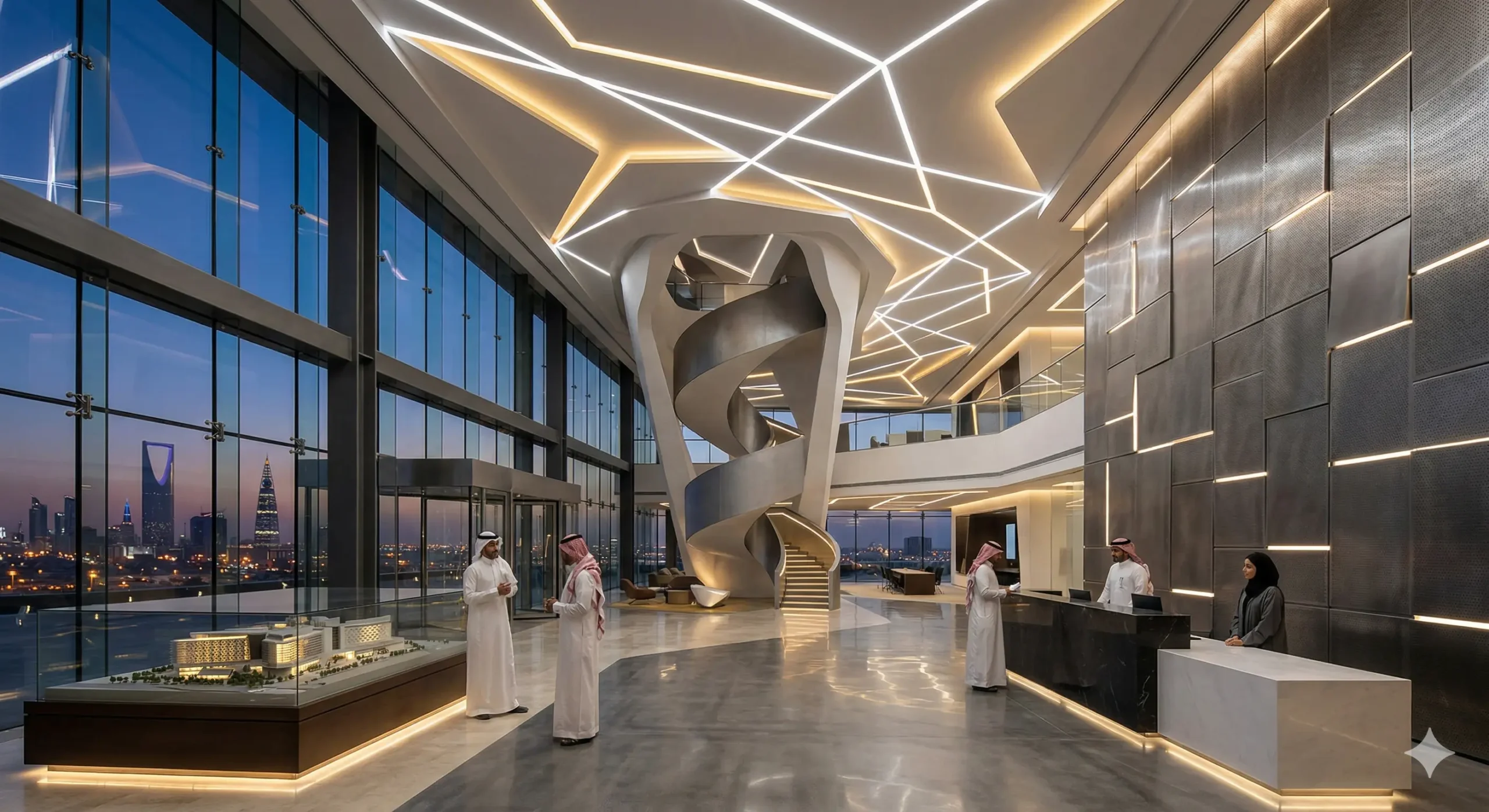
Amid the major transformations taking place across Saudi Arabia, the idea of visual identity is no longer limited to stationery, logos, or digital platforms. It now extends into the physical spaces where people live and work. Building a strong visual identity today requires collaboration between graphic design and architecture. In this context, DTS positions itself as a creative partner that follows a human-centered approach to turning these concepts into tangible environments. By integrating light as a core design element, spaces evolve from simple structures into sensory experiences that reflect a brand’s values and ambitions.
Architectural Visual Identity: Beyond the Traditional Logo
Architectural visual identity can be understood as an integrated system where the philosophy of a brand is embedded into the physical design of a building. Colors, materials, and lighting distribution work together to create a cohesive visual language.
In Saudi Arabia, companies increasingly seek distinctive architectural expressions that align with the ambitions of Vision 2030. This shift places design at the center of building credibility and trust. The objective is not merely to impress visually but to craft a story that visitors can feel the moment they approach the space, strengthening the emotional connection with the brand.
Successful visual identity design within physical environments depends on a designer’s ability to translate intangible values into impactful visual elements. When clients notice consistency between a company’s website and the visual composition of its headquarters, their perception of professionalism and reliability naturally increases.
At DTS, light is seen as the most powerful medium for conveying these messages. It is the one element capable of reshaping spatial perception, influencing temperature perception, and even affecting the mood of those inside the environment.
The Role of Visual Identity in Architecture and Perception
Visual identity in architecture plays a defining role in creating what is often called place branding, the lasting impression a building leaves within the memory of a city.
Human perception is naturally drawn to patterns and harmony. Buildings that lack a clear identity often fade into the background of the urban landscape. Through thoughtful design strategies, otherwise plain walls can become expressive facades that communicate a brand’s message, effectively turning the building itself into a living extension of the company’s marketing strategy.
The visual language of architectural projects acts as a bridge between functionality and beauty. Every design element works together to reflect the institution’s vision in a coherent way.
Research in design psychology indicates that environments shaped by a clear visual identity can improve quality of life and increase productivity. This psychological dimension explains why DTS emphasizes human-centered design principles, ensuring that lighting supports human comfort rather than serving purely as illumination.
Visual User Experience and Human-Centered Design
A strong visual user experience goes beyond simple visual perception. It involves the full sensory interaction between individuals and their surroundings, addressing both emotional and practical aspects of a space.
Comprehensive architectural design considers the visitor’s journey from the moment of arrival through entrances, corridors, and ultimately to the smallest details within offices or living spaces. Within this journey, lighting becomes a key factor in humanizing the environment. By adjusting brightness levels and shadow dynamics, designers can shape spaces that encourage creativity, focus, or relaxation depending on their purpose.
Delivering an outstanding visual experience requires adherence to international standards that protect eye comfort and support human well-being. Guidelines from organizations such as the Illuminating Engineering Society (IES) help designers understand how light influences the human biological clock.
This approach defines the philosophy of DTS, where lighting environments are crafted to enhance well-being while aligning with contemporary principles of integrated architectural design.
Spatial Visual Composition
Spatial visual composition is the underlying structure that brings together colors, materials, and lighting into a unified visual expression of the property owner’s identity.
Without professional lighting distribution, even the most luxurious materials may lose their visual impact. Architectural details can easily disappear in poorly balanced lighting or inconsistent illumination. This is why lighting and visual identity function as inseparable partners. Light highlights the strengths of architectural design and directs attention toward elements that reinforce the brand message.
At DTS, design philosophy treats light as one of the most flexible tools for transforming a space’s visual identity without the need to replace furniture or repaint surfaces. Through smart control systems, buildings can shift their atmosphere between day and night, adapting to different events, moods, or functional needs.
This creative flexibility is what turns many commercial and residential projects in Saudi Arabia into lasting architectural landmarks that combine technological efficiency with artistic expression.
Visual Identity in Saudi Arabia: Vision 2030 and Quality of Life
In Saudi Arabia, visual identity has become essential for companies seeking distinction within large-scale projects such as NEOM and the Red Sea developments.
Following national visual identity guidelines in urban design ensures that architectural projects maintain cultural authenticity while embracing global design standards. Integrating Saudi heritage into architectural visual identity gives projects cultural depth that attracts visitors, investors, and partners alike.
Thoughtful design also contributes to healthier and more motivating work environments that align with the objectives of the Quality of Life Program. Employees and visitors feel valued and comfortable when spaces are designed with care and intention.
Industry discussions in publications like Architectural Record suggest that spatial visual identity is one of the strongest factors influencing employee loyalty to a brand. At DTS, this human dimension remains central, ensuring that design solutions contribute meaningfully to the broader architectural transformation taking place across the Kingdom.
Sustaining Visual Identity and Innovation in Future Architectural Spaces
Building a successful visual identity does not end once a project is launched. It requires a long-term strategy that preserves the strength of the place brand and maintains its psychological impact on visitors.
In a dynamic market like Saudi Arabia, architectural visual identity must remain flexible enough to adapt to technological advancements while preserving the unique characteristics that distinguish it from competitors.
Preventive maintenance and continuous technological upgrades for lighting systems are essential for maintaining positive visual perception over time. Buildings that lose lighting quality or suffer deterioration in visual elements gradually lose their ability to attract visitors and maintain trust, which can ultimately affect the brand’s reputation.
At DTS, design strategies focus on ensuring that the visual composition of spaces remains vibrant and consistent with institutional values, extending the life of the investment while maintaining alignment between brand identity and physical reality.
Artificial Intelligence and Adaptive Architectural Identity
The integration of artificial intelligence into contemporary visual identity design opens new possibilities for creating architectural environments that respond dynamically to human needs.
Smart control systems now allow buildings to adjust their visual language based on weather conditions, visitor numbers, or the type of activities taking place within the space. In this way, identity becomes something dynamic rather than static.
Such responsiveness enhances the overall visual user experience, turning an ordinary visit into a memorable sensory encounter. This level of innovation aligns closely with the ambitions of projects developed under Saudi Vision 2030.
Studies suggest that buildings designed with a human-centered philosophy generate significantly stronger visitor loyalty compared to traditional structures. At the same time, compliance with international visual health standards introduces an ethical and environmental dimension that modern audiences increasingly appreciate.
Innovation in architectural visual identity therefore requires both technological courage and sensitivity to cultural context, maintaining a careful balance between modernization and heritage.
Strategies for Sustaining Brand Leadership Through Design
To maintain brand leadership in the future, companies must adopt continuous development strategies similar to those implemented by DTS, ensuring that design evolves alongside new technological and environmental standards:
- Digital sustainability: Upgrading control systems to improve energy efficiency and align with initiatives such as the Saudi Green Initiative.
- Humanizing technology: Integrating technological innovations in ways that prioritize human comfort rather than creating purely technical displays.
The visual language of architectural projects represents a continuous dialogue between buildings and their visitors. For this reason, stagnation is the greatest threat any successful brand can face in physical environments.
Innovation does not always require radical transformation. Sometimes subtle changes in lighting angles or shadow distribution are enough to reveal new architectural details that reflect the brand’s evolution.
By treating visual identity design as an ongoing process, organizations ensure that their message remains clear and impactful, reinforcing their position as leaders within Saudi Arabia’s rapidly evolving market.
Conclusion
In modern architecture, the relationship between lighting and visual identity is inseparable. Together, they shape environments that prioritize human well-being while expressing the core values of a brand.
Understanding visual perception and using it strategically within architectural design is what positions DTS as a trusted creative partner. Through carefully crafted lighting and spatial design, spaces are transformed from static structures into living stories told through light, shadow, and thoughtful design.